April is National Pet First Aid Awareness Month, a time dedicated to educating pet owners about the importance of first aid preparedness. As loving pet parents, we do everything possible to keep our furry friends happy and healthy, but emergencies can happen anytime. Knowing basic pet first aid can make all the difference in ensuring your pet’s safety and well-being in critical moments.
Why Pet First Aid Matters
Just like with humans, prompt first aid can help stabilize a pet’s condition before getting to the veterinarian. A quick and appropriate response can mean the difference between life and death in emergencies such as choking, poisoning, injuries, or heatstroke.
Essential Pet First Aid Tips
1. Know Your Pet’s Normal Vitals

- Check their pulse by placing fingers inside their thigh.
- Normal heart rate range for dogs: 60-140 beats per minute (depending on size).
- Normal heart rate range for cats: 140-220 beats per minute.
- Respiration: 10-30 breaths per minute for dogs, 20-30 for cats.
2. Create a Pet First Aid Kit
There are many pre-made options on the market, but you can put together your own well-stocked first aid kit by gathering the following items:
3. Gauze pads and bandages
- Tweezers and scissors
- Antiseptic wipes
- Sterile Saline solution
- Syringe or dropper
- Hydrogen peroxide (for inducing vomiting under vet guidance)
- Digital thermometer
- Pet-safe pain relievers (only as advised by a vet)
- Muzzle
- Disposable gloves
- Cold pack
- Emergency contact numbers, including your veterinarian and a local emergency clinic
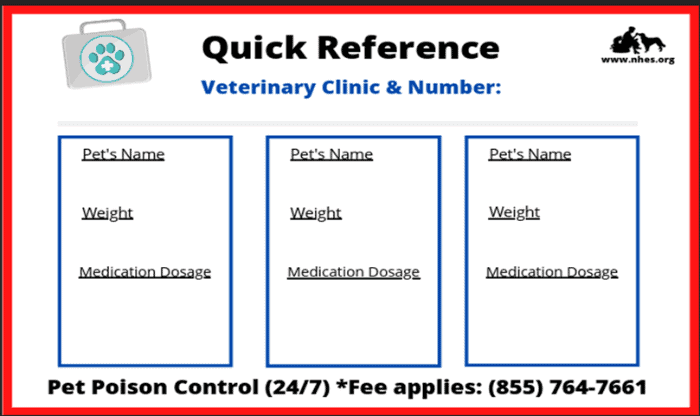
* This is a free printable quick reference provided by the National Humane Education Society.
4. Basic Instructions for Handling Common Emergencies
- Choking: Remove visible obstructions carefully with tweezers, but do not push them further.
- Bleeding: Apply pressure with a clean cloth to stop the bleeding.
- Poisoning: Contact a vet or poison control immediately and avoid inducing vomiting unless advised and directed by a veterinarian.
- Heatstroke: Move the pet to a cool area, offer water, and use damp cloths to lower body temperature.
5. Learn CPR for Pets
(Learn in-depth instructions and training in a pet CPR course).
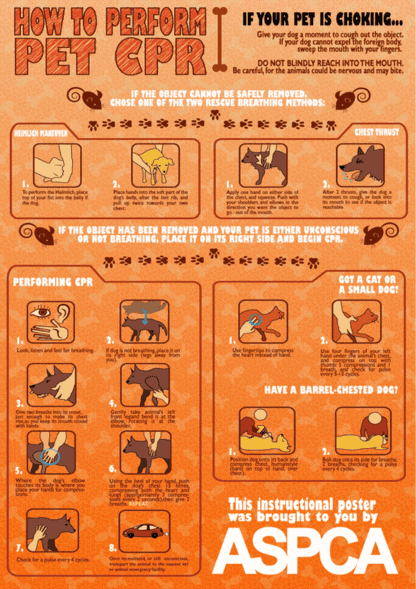
- Lay your pet on their right side.
- Check for breathing and a pulse.
- If no pulse, perform chest compressions: 30 compressions followed by two rescue breaths.
- Continue until a vet takes over.
During National Pet First Aid Awareness Month, take the invaluable and proactive steps to ensure you’re ready to help your pet in an emergency. Consider taking a pet first aid/CPR course- or even downloading a pet first aid app (American Red Cross has a free pet first aid app) to keep guidance at your fingertips. Most importantly, always consult your veterinarian for the best advice on keeping your pet safe. Preparing today can save a life tomorrow.